If your best agency is “known” but not findable across teams, you don’t have a roster. You have folklore.
Enterprise marketing doesn’t have an agency shortage. It has a visibility problem that forces teams to restart decisions they already solved.
Every specialized campaign or brand project proves it, especially across brands that are not your tier one products. Teams ask who to use, someone names the usual suspects who are too expensive, and the team struggles to build a viable shortlist from memory. Meanwhile, approved partners with the right capability, region, and experience sit untouched because no one can surface them with confidence fast enough.
The result is predictable. Another brief. Another vetting cycle. Weeks spent recreating certainty instead of activating it. Not because the organization lacks options, but because proof of fit, performance, and safety is scattered across inboxes, decks, and individual memory recall.

Reuse doesn’t fail because agencies underperform. It fails because evidence is hard to access at the moment of decision. When visibility lags, starting over feels safer than moving forward.
Why “Approved” Does Not Automatically Mean “Reusable”
“Approved” is a governance label. It tells you the business is allowed to engage a supplier.
It does not tell a campaign owner, under deadline, whether they should reuse that supplier for this specific project or campaign.
That decision needs three signals. Miss any one of them and the org takes the least risky path, which usually means a fresh search, or defaulting to the known incumbent even if they are less desirable.
-
- Fit: Fit is situational. You are not looking for “marketing agency.” You are looking for a “shopper marketing” partner with the right capability, in the right region, in the right category, with the right operating constraints. Language and culture coverage. Cost fit. Ability to work with your internal workflow and approvals. Without that context, “approved” is too broad to be useful, so each employee keep rebuilding shortlists from scratch.
- Proof: This is the difference between “they’re on the roster” and “they’re a good bet.” What happened last time? Did they hit timelines? Did stakeholders fight the process? Did the work ship clean? When that evidence lives in inboxes and postmortems instead of being attached to the partner record, people fall back on the easiest proxy even if they don’t have a good track record or aren’t really a great fit.
- Safety: Even when fit and proof are there, safety has to be obvious early. Contract status. Scope guardrails. Required checks if they are handling PII (Personal Identifiable Information) like collecting shopper names and emails. Otherwise teams hesitate because nobody wants to be the person who accidentally kicked off non-compliant work.
And the friction is real. Median cycle time to establish a supplier contract is 40 days, while setting up a supplier record is 3 days. That gap is exactly why teams treat “reusing someone” as risky when contract clarity is not visible at the moment of decision.
Meanwhile, the risk picture is getting harder, not easier, because third-party oversight is fragmented in most organizations. Many still rely on spreadsheets and multiple tools, and report actively managing only about a third of their third parties. When safety signals are scattered, “approved” stops feeling safe in practice.
So this is the real gap: rosters were built to answer “can we.” Reuse only scales when the system can answer “should we” in the moment, with fit, proof, and safety all visible enough that choosing a known-good partner feels lower risk than starting over.
The Reuse Loop: How Top Teams Make Great Agencies Easier to Find Next Time
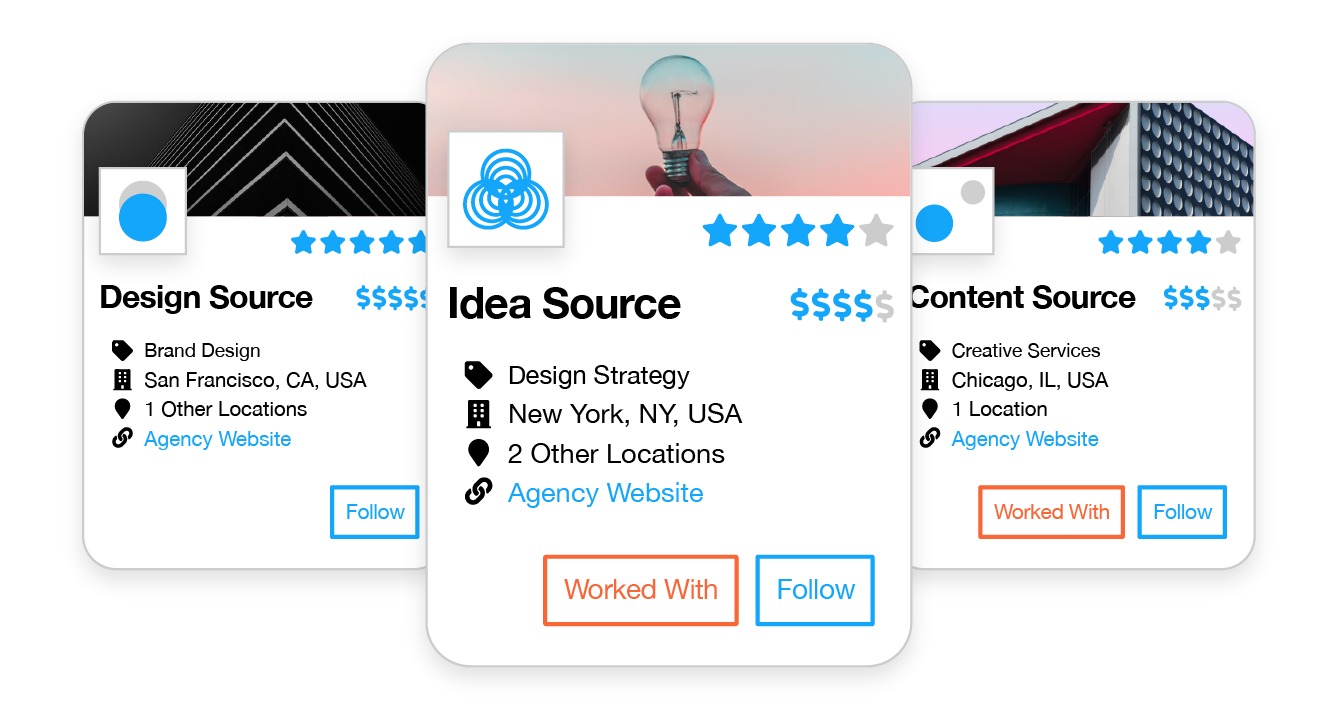
The only way reuse scales is if each engagement makes the next decision easier. Not in theory. In the actual moment when someone needs a shortlist by the end of day.
Here’s the loop top teams run. It’s simple on purpose.
Step 1: Make Agencies Discoverable the Way Marketers Actually Search
Nobody searches a roster by vendor name. They search by situation.
-
- “Fast-turn performance creative”
- “Regulated category launch support”
- “Regional localization at scale”
So the roster has to behave like search, not like a directory. That means consistent tags that map to how marketers think: service capability, product category, region or country, operating constraints, third party risk management (TPRM) approval. You do not need taxonomy perfection. You do need tags people trust enough to use when the heat is on.
The win condition is straightforward: a campaign owner should be able to get to a defensible shortlist in minutes, without leaving the approved ecosystem. The alternative is the slow path. The average agency review cycle runs 2.5 to 3.2 months, which is what happens when discovery turns into a process instead of a search.
Step 2: Attach Evidence to the Partner Record
Most enterprises have plenty of opinions about agencies. They just do not live anywhere the next person can use. So every new campaign does the same thing: rebuild context, rebuild confidence, then pick the least risky option.
The fix is an “evidence pack” that stays with the agency profile. Keep it minimal, but decision-grade:
-
- Examples of comparable work (not a full portfolio, the 2 or 3 most relevant pieces)
- What was delivered and under what constraints (timeline, channels, approvals, regulatory requirements)
- Who ran it internally (so someone can ask one good question instead of ten vague ones)
- What you would repeat, avoid, or change next time
This does not need to be a heavyweight scorecard. It needs to be usable. When structured evidence is missing, decisions tilt toward easy heuristics like cost. That is not a strategic failure. It is what people do when they cannot get to proof quickly.
Step 3: Turn Governance Into an Early Signal, Not a Late Interruption
The worst workflow is “pick first, validate later.”
It creates rework when someone realizes the contract is stale. It creates exceptions when the scope does not match what is allowed. It creates last-minute escalations when risk checks show up after stakeholders are already committed.
Early clarity prevents all of that. Contract status, required checks, and guardrails should show up before a team starts making promises internally or briefing an agency. This is not about slowing marketing down. It is about removing the surprise factor that causes slowdowns later.
Reuse grows when the compliant path is also the fast path. If governance feels like a trap door, teams avoid it. If it feels like a green light, teams lean on it.
Step 4: Capture Learning in Two Minutes, Every Time
Institutional memory does not need a quarterly business review. It needs a habit that actually happens.
A two-minute post-engagement check-in beats a retro that disappears into a folder. The goal is not a perfect evaluation. It’s a clear signal for the next person making the call.
Keep it dead simple:
-
- Use again / Use with caution / Do not use
- One sentence why
- One sentence on what to optimize next time
This matters because most organizations are still struggling to maintain continuous visibility across third parties. Many rely on spreadsheets and multiple tools, and report actively managing only about a third of their third parties. In that environment, memory decays fast unless you capture it in the flow.
Run this loop consistently and something shifts. Every engagement stops being a one-off. It becomes fuel. Over time, your best agencies stop being “known.” They become findable, provable, and safe to reuse at speed.
SpotSource: The System That Makes Agency Reuse the Default
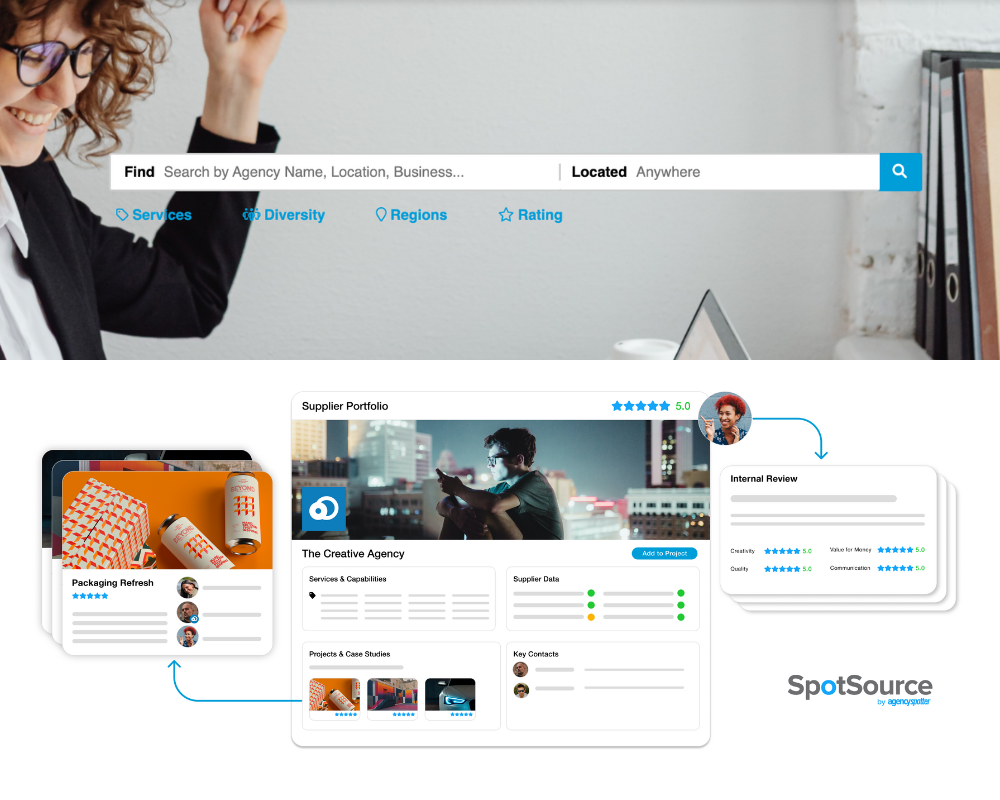
SpotSource is built for one job: make proven partners easy to find, safe to reuse, and hard to misuse inside enterprise marketing workflows.
It does that by lining up with the reuse loop, not fighting it.
-
- Discovery built for marketers. When a campaign owner is under pressure, they do not search by vendor name. They search by situation. SpotSource is designed to make that kind of search possible inside the approved ecosystem, with filters that narrow by capability, region, and use case instead of forcing people to “ask around” first.
- Reusable proof that travels with the partner. The problem in most enterprises is not a lack of opinions about agencies. It’s that the context lives in the wrong place. SpotSource keeps performance context close to the decision by making it natural to attach supplier performance data and engagement history to the partner record, so the next team is not starting from a blank page.
- Reuse safety signals before commitment. Most late-stage sourcing drama happens for one reason: a team picked a partner, then someone realized the checks were not clear. SpotSource brings contract and risk signals into the marketplace experience, so teams can see what is safe early, before they brief, promise timelines, or kick off work.
- Institutional memory that stays lightweight. Great partners should not disappear after one project. SpotSource supports capturing and sharing supplier performance information across the company, so every engagement adds usable memory instead of more tribal knowledge.
- Adoption by speed. This is the real unlock. If using the system feels slower than texting a colleague, it loses. SpotSource is built around self-service discovery and decision support, so the fastest path to a defensible shortlist is inside the workflow, not outside it.
This is how marketing moves faster while procurement gets fewer exceptions and fewer late surprises.
A Simple Way to See Where Reuse Breaks Down
If any of this feels familiar, the fastest next step is a quick reality check.
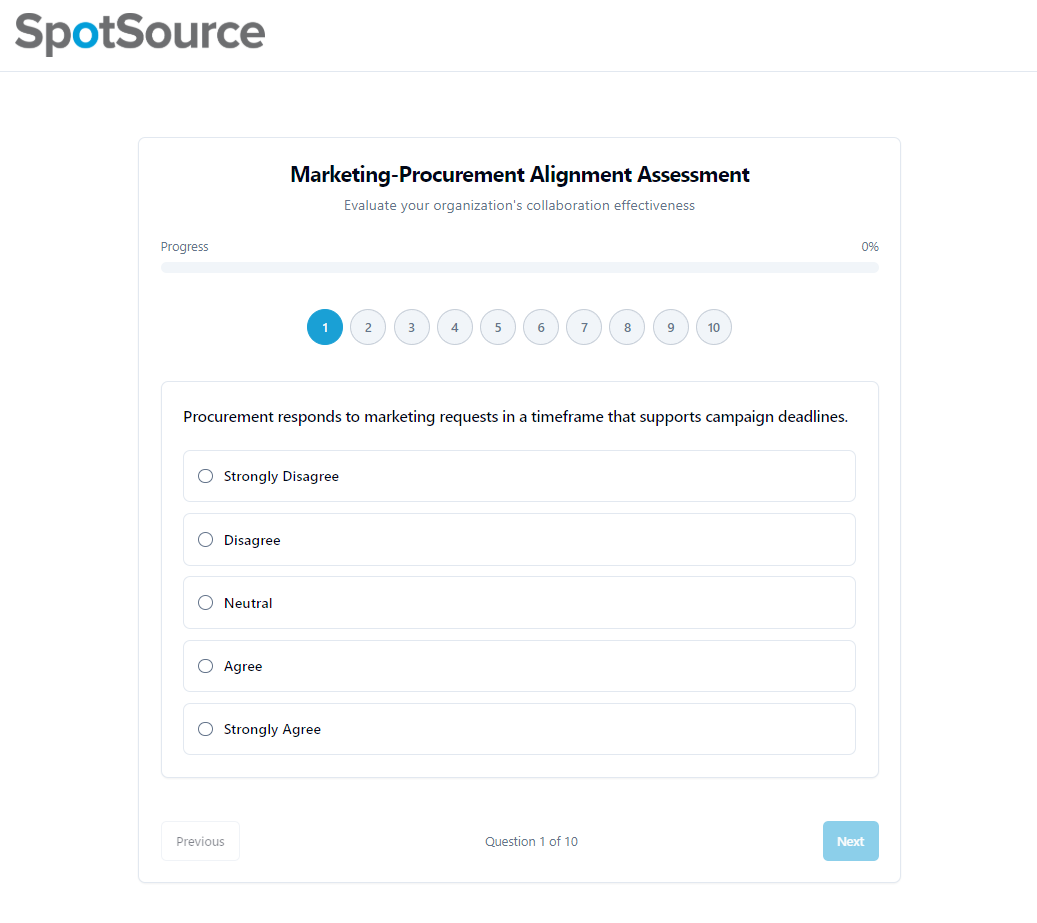
The Marketing-Procurement Alignment Scorecard shows where collaboration actually holds and where it quietly slows reuse down. It takes under three minutes and gives you a clear score across communication, process alignment, and trust, plus practical recommendations you can act on right away.
No prep. No sales pressure.  Start your free assessment
Most teams land around 72 out of 100. The value is seeing why, and what to fix first.