Most agency briefs don’t fail because they’re poorly written.
They fail because they’re written in the dark.
Enterprise marketing teams sit down to brief an agency without a clear picture of what that agency already knows, what they’ve already done, or how they’ve actually performed inside the organization. So the brief becomes a guessing exercise—part assumption, part repetition, part reinvention.
The result?
- Agencies are re-taught things they already learned two years ago
- Teams unknowingly repeat past mistakes (and pay for them again)
- Projects slow down weeks in when missing context finally surfaces
And by the time anyone realizes what was missing, the timeline has slipped, the budget is stretched, and the relationship is already under pressure.
This isn’t a briefing problem. It’s a visibility problem.
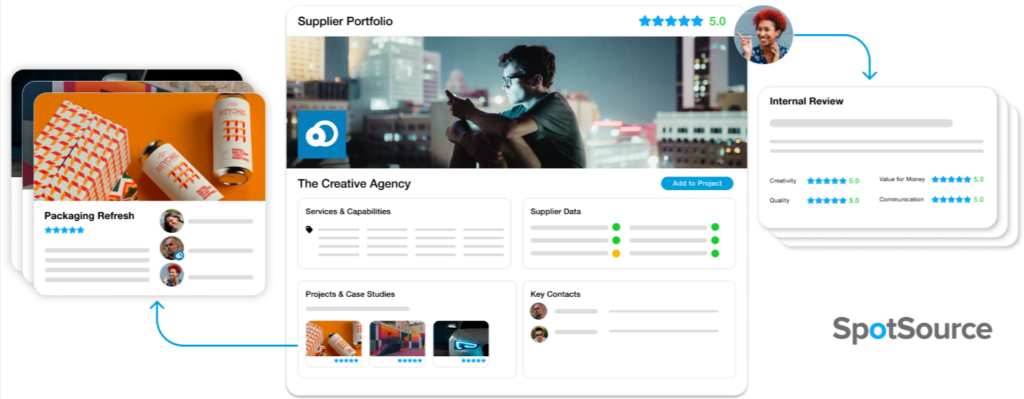
Because in most enterprise organizations, the data that should inform a great brief—past work, internal feedback, performance history, compliance status—does exist.
It’s just scattered across systems, buried in inboxes, or locked in the heads of people who may not even be at the company anymore.

Great agency relationships don’t start with a better brief.
They start with better context before the brief is written.
Here are the six data points every enterprise marketing team should have in hand before they brief an agency—and why missing even one of them quietly drives cost, delay, and underperformance.
What Should Your Team Know Before Writing an Agency Brief?
1. What work have they already done for your company?
This seems obvious but it almost never gets checked.
In large enterprise organizations, agencies on the approved roster have often worked across multiple brands, business units, or geographies, sometimes for years.
But because that knowledge lives in scattered inboxes, shared drives, and the memories of colleagues who may no longer be at the company, many marketers brief agencies as if it’s day one when it’s actually year three.
Before you write a single line of a brief, you should know:
- Which of your brands has this agency worked with?
- In which markets?
- On what type of work?
- What did they deliver?
This context shapes everything: the expectations you set, the ramp-up time you budget, and the assumptions you’re allowed to make about what the agency already understands about your brand.
An agency that has delivered three APAC campaigns for your company doesn’t need the same foundational briefing as one you’ve never worked with. Treating them the same wastes everyone’s time. Plus, you might uncover work that is a great fit for what you are trying to accomplish.
The institutional risk here is real. Research consistently shows that knowledge management failures are among the most significant sources of operational inefficiency in large organizations. In marketing, that inefficiency shows up most visibly when teams brief an agency without knowing what that agency has already learned about them. These silent assumptions don’t just waste time, they directly impact outcomes.
2. Who on your team has worked with them, and how did it go?
Institutional knowledge about agencies doesn’t live in your ERP. It lives in people’s heads, and it walks out the door with them.
Before you brief, you need to know which colleagues have direct, recent experience with this agency and whether their experience was positive.
Don’t just stop at the agency’s general reputation either. You’ll want to get specific, project-level insight such as:
- Did they meet deadlines?
- Were they responsive under pressure?
- Did the strategic thinking hold up when the brief got complicated?
- Are there any watch outs that will help things go more smoothly?
A 15-minute conversation with the right internal stakeholder before you brief is worth weeks of misaligned work after. The challenge in enterprise organizations is finding that person. Teams are large. Turnover is high. And there is rarely a system that surfaces who worked with whom.
This is also why the quality of an agency brief in large organizations is so often inversely correlated with how long the team has been together.
Newer teams, lacking institutional memory, over-rely on the agency’s own materials—pitch decks, case studies, credentials—rather than the far more reliable internal record of actual project performance.
The fix isn’t complicated, but it does require intention: before you brief, ask around.
Build the habit of documenting who worked with which agency and what happened. It’s one of the highest-leverage investments a marketing organization can make.
3. What are their performance ratings on past projects?
An agency’s pitch deck is always excellent and polished. Their performance data tells a different story. Or at least, it should.
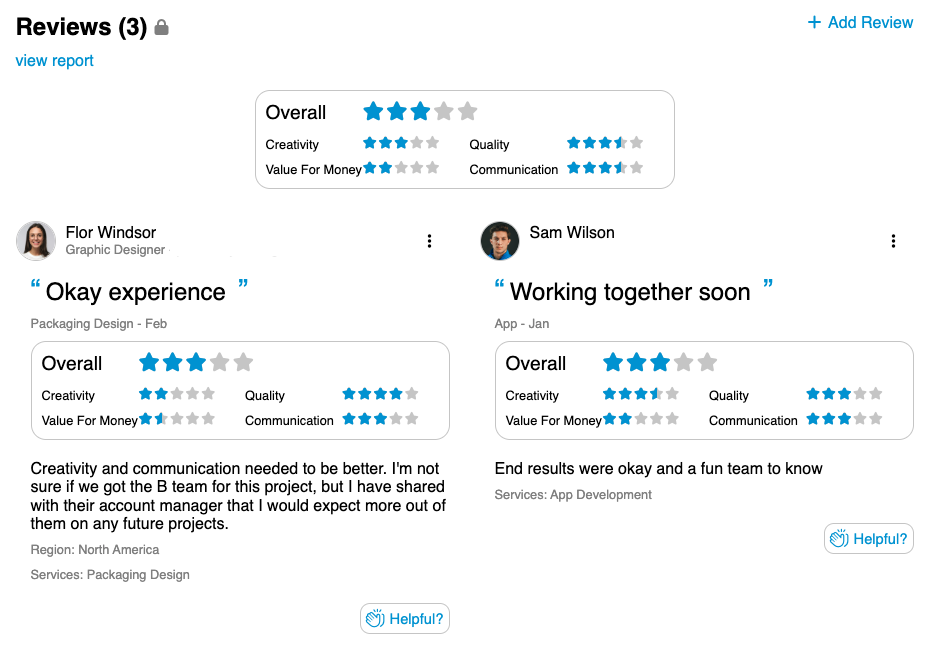
Peer reviews from inside your own organization are the most credible data you will ever have on an agency. They reflect real briefs, real timelines, and real outcomes, not curated case studies designed to win new business.
The problem is that in most enterprise marketing organizations, this data either doesn’t exist in a structured form, or it exists somewhere inaccessible.
Before you brief, you should be able to look at how colleagues have rated this agency on the dimensions that actually matter to your engagement, things like: creativity, quality, value for money, and communication are often top of mind.
It’s best if you can look at how colleagues have rated this agency on the dimensions that actually matter… For many teams, that means modernizing how supplier evaluations are captured and used. Annual evaluations might help procurement with new contracts, but they have a time bias versus capturing reviews after each project and using those as part of the annual evaluation.
Remember: it’s not what the agency says about themselves. Instead, it’s what your peers say.
This matters even more in global organizations where an agency’s performance might vary significantly by region, by brand, by practice area, or by team lead.
For instance, an agency that is exceptional on brand strategy might be mediocre on production. An agency that excels in North America might struggle in Southeast Asia.
Without structured internal performance data, you can’t see any of this—and you’re essentially starting from zero with every brief.
Studies on supplier performance management consistently find that organizations that systematically capture and use vendor performance data outperform those that don’t on cost efficiency and delivery quality. Marketing is no different; it just hasn’t historically had the infrastructure to support it.
4. Are they fully-approved: contract, compliance, and payment-ready?
Nothing kills momentum like finding out mid-project that the agency you’ve briefed isn’t cleared to handle the data your project requires.
This is more common than most marketers want to admit. In complex enterprise environments, agency approval involves multiple overlapping systems, like:
- contract management
- information security reviews
- anti-bribery and corruption (ABAC) clearances
- privacy compliance
- payment system onboarding
An agency can be approved in one system and lapsed in another. And, unless someone, usually from marketing procurement, has time to check all of them before the brief, the project pays the price.
The scenario is painfully familiar: you’re four weeks in, you’ve aligned on creative direction, you’ve briefed the team, and then someone in procurement or legal flags that the agency’s contract expired or that they haven’t been re-cleared to handle personal identifiable information (PII) since last year’s risk management review.
You either scramble to fix the compliance gap or you start over. Both waste precious time and momentum.
Before you brief, confirm their contract status, their risk management clearances, and their payment system status. A fully approved agency is a project you can actually start. An agency with an outstanding compliance gap is a liability you haven’t discovered yet.
This is also where marketing and procurement alignment pays off most directly. When procurement has visibility into which agencies are active and fully cleared—and when that information is easy for marketers to access—the friction that typically delays project starts disappears. The brief goes to an agency that can receive it. The project starts when it should.
5. Do they have real coverage in the region you’re working in?
“Global” is one of the most overused and least meaningful words in agency credentials.
Almost every agency of a certain size will describe themselves as global. What that means in practice ranges from genuinely distributed operations with local expertise and cultural fluency, to a small team in London managing EU briefs from afar, to nothing more than a website that lists offices that no longer exist.
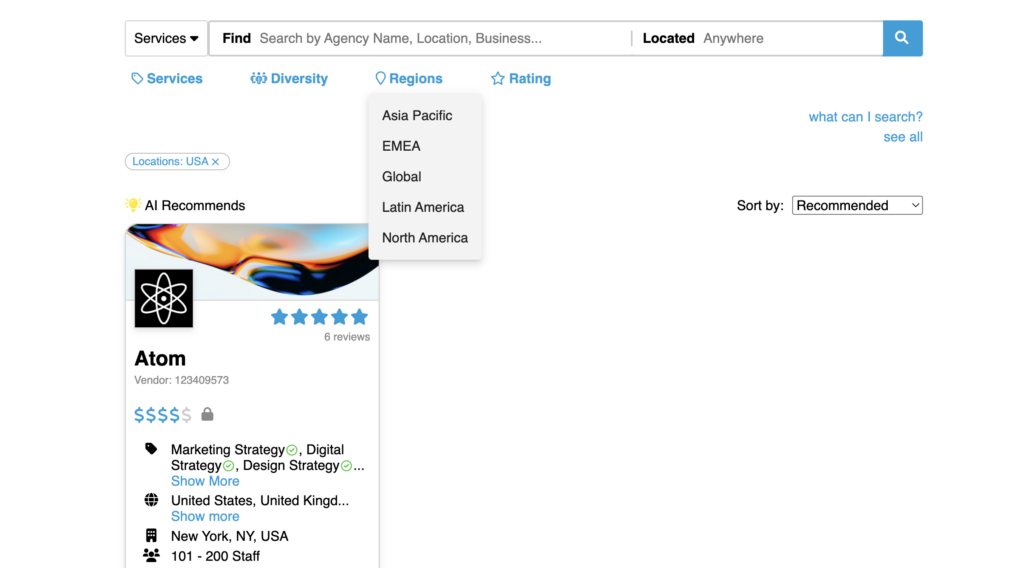
Before you brief, confirm where the agency actually operates, not where their website says they have offices, but where they have a track record of delivering real work at the standard your brief requires.
Example: for a campaign in Germany, that means German-speaking teams with genuine cultural knowledge of the market, not a U.S.-based team that has done one EU project.
Regional capability gaps are one of the most consistent sources of mid-project failure in global marketing organizations.
The brief might be clear. The relationship might be established. But the agency’s local team doesn’t have the depth the project requires, and by the time that becomes apparent, the timeline has slipped and the costs have escalated.
The question to answer before the brief isn’t “do they have offices there?” It’s “have they delivered work there—work that looks like what we’re asking for—and can I see it?”
6. What case studies exist from your own projects with them?
Third-party case studies from an agency’s own website are marketing materials. Internal case studies from your own commissioned projects are evidence.
There is a significant difference between what an agency chooses to present to win business and what your organization’s own experience with that agency actually looks like.
Before you brief, look for documented work your company has already commissioned from this agency: what the brief was, what was delivered, what worked, and what didn’t.
This serves two purposes. First, it gives you a far more reliable picture of what to expect than any credentials document. Second, it prevents the expensive mistake of re-solving problems your organization has already solved.
The loss of institutional memory around past creative and campaign work is a chronic, underappreciated cost in enterprise marketing. Teams brief agencies on campaigns that are nearly identical to work done two or three years ago by a different team. And because no one documented the original, they start from scratch. The agency does too, billing for discovery and strategy they’ve already completed. The brief is written without the benefit of what worked. Then the organization pays twice.
If your organization has commissioned work from this agency before, that work is your brief’s starting point, not a blank page.
Faster Briefs and Improved Results Come From Better Context
There’s a persistent belief that better agency outcomes require longer briefs with more detail, more context, more specification. In practice, the opposite is often true: a shorter, sharper brief informed by good data consistently outperforms a lengthy brief written in an information vacuum.
The six data points above aren’t meant to slow down your marketing team’s briefing process. What they’re meant to do is make the brief informed enough that the project can actually move at the speed you need.
The best agency relationships aren’t built on chemistry, even though chemistry matters. They’re instead built on context. On a shared understanding of what’s been done before, what worked, what the constraints are, and where the opportunity is.
The problem for most enterprise marketing organizations is not that this information doesn’t exist. It’s scattered across systems that were never designed to talk to each other: project management tools, ERP platforms, email threads, shared drives, and the heads of colleagues who may have left the company.
Surfacing all six data points before every brief requires either a heroic effort of coordination or a purpose-built system that makes the data accessible when you need it.
When those six data points are in one place—past work, peer experience, performance ratings, compliance status, regional coverage, and internal case studies—briefing an agency stops being an act of faith and becomes an informed decision. Projects start faster, partnerships work better, and the brief itself is stronger for it.
SpotSource helps enterprise marketing teams activate the right agency partners faster—with pre-vetted, procurement-approved rosters and AI-powered tools designed to support human decision-making, not replace it. Get a free demo at spotsource.com.